
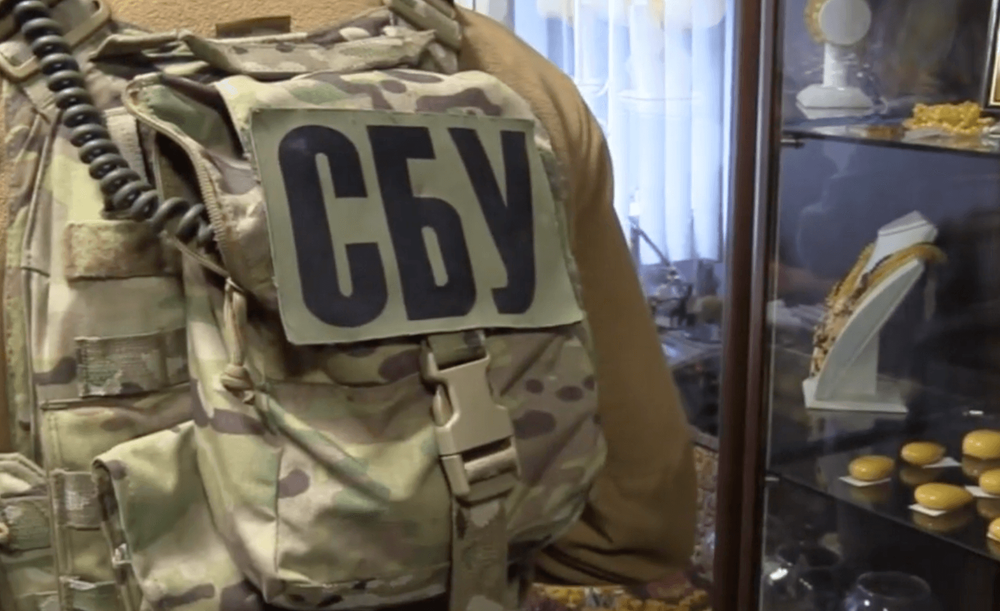
Ukraine fires two senior security officials amid corruption probe into scam call centers
Ukraine's security service has fired two senior officials amid a corruption investigation into an alleged criminal network that bribed law enforcement officers to protect fraudulent call centers and other illegal operations.
The dismissals, announced Wednesday evening by Security Service of Ukraine (SBU) chief Oleksandr Poklad, came as anti-corruption investigators searched properties linked to several senior security officials.
The National Anti-Corruption Bureau of Ukraine (NABU) and the Specialized Anti-Corruption Prosecutor's Office (SAPO) said earlier Wednesday that they had uncovered a criminal organization that paid bribes to senior officials in exchange for allowing scam call centers to operate without interference.
The investigation, dubbed Operation Carthage, is part of a broader crackdown on fraudulent call centers that have operated in Ukraine under the protection of local authorities.
The alleged network included at least 12 people, among them senior officials from the SBU, the Prosecutor General's Office and the National Police, as well as individuals linked to organized crime.
According to investigators, the group's activities extended beyond online fraud to drug trafficking, counterfeit cigarette production and currency forgery. Its members also allegedly organized kidnappings, assaults and other acts of violence.
"The criminal organization used corrupt connections within law enforcement agencies to protect its illegal activities and generate illicit profits," NABU said.
Poklad did not identify the two dismissed officials but said the SBU was cooperating fully with investigators.
"The Security Service expects a transparent, objective and impartial investigation," Poklad said in a statement. He added that he was in contact with intelligence agencies in partner countries to ensure that suspected crimes were also investigated abroad.
NABU said detectives encountered resistance during one court-authorized search when a senior SBU official threatened to use a firearm and prevented investigators from entering the premises.
The latest allegations follow an earlier investigation disclosed in September into a suspected bribery scheme involving officials in the office of then-Prosecutor General Ruslan Kravchenko.
Investigators alleged that officials had collected payments from fraudulent call centers since mid-2025 in exchange for ensuring that police and prosecutors did not interfere with their operations. The centers allegedly targeted victims both in Ukraine and abroad.
Kravchenko denied involvement in protecting the operations and subsequently submitted his resignation. He later left Ukraine, saying he was traveling on official business.
The scandal has also prompted lawmakers to strengthen penalties for online fraud.
In mid-September, Ukraine's parliament approved legislation introducing specific criminal penalties for establishing, operating or working at fraudulent call centers, as well as recruiting people to participate in such schemes.
The legislation also targeted fraud carried out through electronic communications, including the misuse of stolen personal and banking information. Those convicted of involvement in fraudulent call centers could face prison sentences of seven to 12 years under the new legislation.
Fraudulent call centers have become a persistent problem in Ukraine, with criminal groups employing teams of operators to trick victims into transferring money or providing access to their bank accounts.
According to Ukraine's National Police, scammers frequently impersonate bank employees, law enforcement officers or financial advisers. Some lure victims onto fraudulent investment platforms, while others spoof phone numbers to make calls appear to come from legitimate institutions.



Daryna Antoniuk
is a reporter for Recorded Future News based in Ukraine. She writes about cybersecurity startups, cyberattacks in Eastern Europe and the state of the cyberwar between Ukraine and Russia. She previously was a tech reporter for Forbes Ukraine. Her work has also been published at Sifted, The Kyiv Independent and The Kyiv Post.